
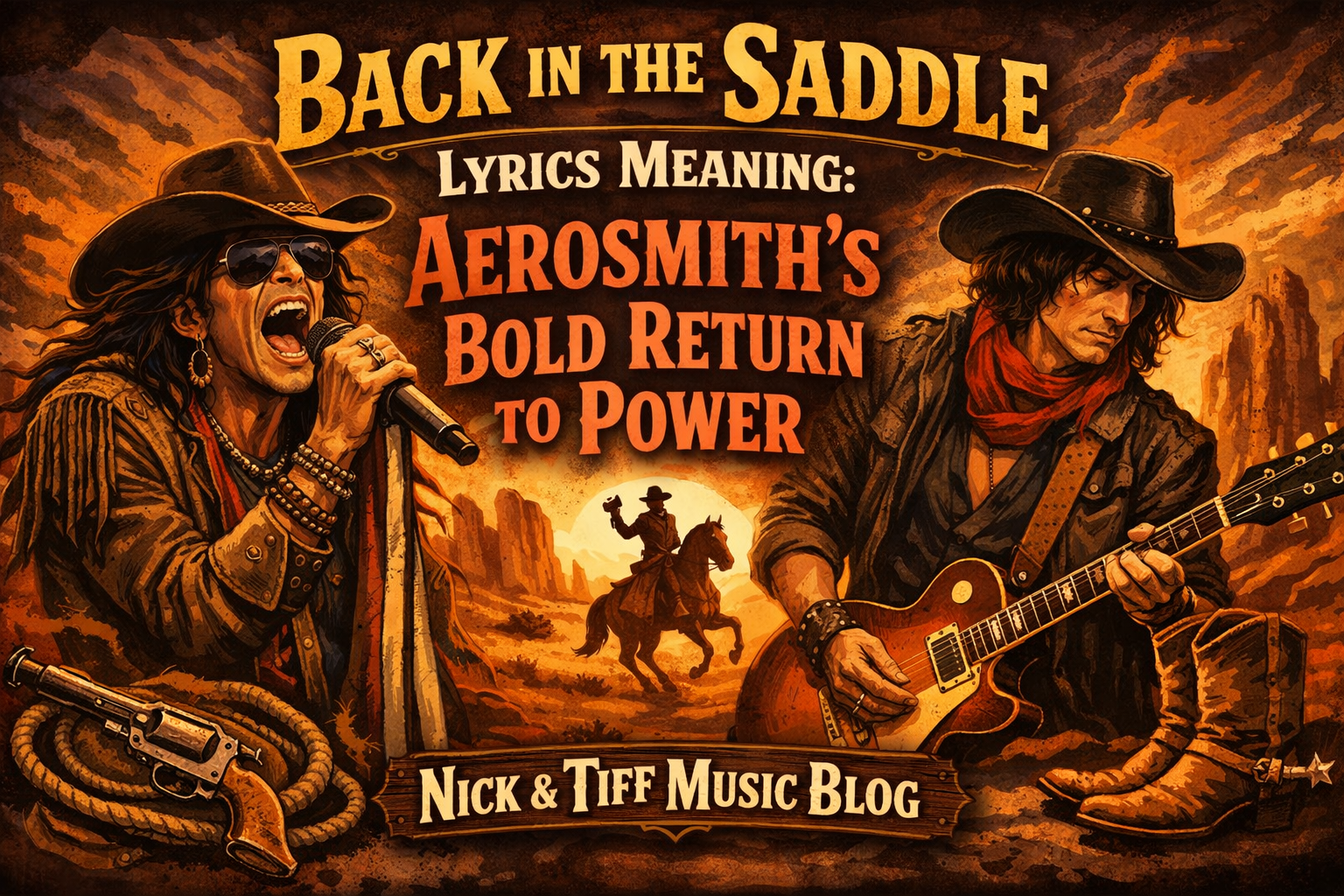
“Back in the Saddle” by Aerosmith is about reclaiming power and stepping back into dominance with confidence and swagger. Opening their 1976 album Rocks, the song uses bold Western imagery and attitude-driven lyrics to present the band at their most unapologetic and in control.
This is a statement track. Aerosmith aren’t just back—they’re charging forward with attitude.
Explore more of our Aerosmith coverage here.
Quick Details
- Song: Back in the Saddle
- Artist: Aerosmith
- Album: Rocks
- Released: 1976
- Written by: Steven Tyler & Joe Perry
- Length: 4:40
What is “Back in the Saddle” about?
“Back in the Saddle” by Aerosmith is about stepping back into rock’s spotlight—reclaiming control with confidence, swagger, and zero hesitation.
Using Western imagery and outlaw themes, the song paints Steven Tyler as a larger-than-life figure returning to the spotlight. But underneath the cowboy metaphors, it’s really about Aerosmith reasserting themselves as one of rock’s most dangerous and electrifying bands.
It’s not subtle. It’s not reflective.
It’s Aerosmith at full swagger.
Opening Rocks with Authority
This isn’t just an album opener—it’s a warning shot.
Opening Rocks as track one, “Back in the Saddle” sets the tone immediately—and it doesn’t let up.
The stomping groove, layered guitars, and unmistakable gang vocals make it feel massive right from the start. The production is raw but deliberate, giving the track a heavy, almost physical presence.
It establishes the album’s identity right away—hard, confident, and stripped of anything unnecessary. From here, tracks like “Last Child” and “Rats in the Cellar” build on that same raw energy.
Explore “Last Child” further in our song meaning breakdown:
Last Child Lyrics Meaning: Aerosmith Questioning the Life They’re Living
Swagger, Power, and Pure Rock ‘n’ Roll Energy
Everything about “Back in the Saddle” leans into excess and confidence.
- The rhythm feels like a march forward—unstoppable and aggressive
- The guitars from Joe Perry and Brad Whitford are thick and gritty
- The vocal delivery is theatrical, almost like a character stepping onto a stage
And that’s the key—this song feels like an entrance.
Why the Western Imagery Works
The cowboy/outlaw theme isn’t random—it reinforces the idea of independence and dominance.
Lines about riding, guns, and territory all point back to one thing: control. Aerosmith are presenting themselves as untouchable, living outside the rules and owning their space.
It turns a rock song into something cinematic.
Final Thoughts
“Back in the Saddle” isn’t about nuance—it’s about presence.
It captures Aerosmith at a moment where everything clicks: the sound, the attitude, and the identity. As an opening track, it does exactly what it needs to do—announce that the band is locked in and not backing down.
It’s not just a great song.
It’s one of the most confident openings in classic rock.
Support Nick & Tiff Music: As an affiliate these links help support the blog at no extra cost to you-and we truly appreciate it! Thank you for supporting.
Shop Aerosmith Vinyl, CDs Books & Merch
“Back in the Saddle” FAQ
What album is “Back in the Saddle” on?
“Back in the Saddle” appears on Aerosmith’s 1976 album Rocks, widely considered one of the band’s heaviest and most influential releases.
Is “Back in the Saddle” one of Aerosmith’s biggest songs?
It’s not their highest-charting hit, but it’s one of their most recognizable and defining tracks—especially as an album opener.
Why does “Back in the Saddle” use cowboy imagery?
The Western theme reinforces ideas of power, independence, and control, aligning with the band’s larger-than-life persona.
Who sings lead vocals on “Back in the Saddle”?
Steven Tyler handles lead vocals, delivering one of his most theatrical performances.
Browse our posts by Bands & Artists:
Bands & Artists | Explore Music Coverage by Artist – Nick & Tiff Music Blog
Related Reads
Toys in the Attic Album Review #26: Why This Is One of Aerosmith’s Best Albums
You See Me Crying Lyrics Meaning: Aerosmith’s Misunderstood Heartbreak
No More No More Lyrics Meaning: Aerosmith’s Song About Rock and Roll Excess and Burnout
The Real Meaning Behind “Mama Kin” by Aerosmith (Song Review)
Last Child Lyrics Meaning: Aerosmith Questioning the Life They’re Living
Same Vibes #9: Mick Jagger & Steven Tyler
What Is the Best Beatles Album? A Look at Their Greatest Records
What Is The Best Rolling Stones Album? Here’s What Each One Does Best
What Is the Best Bob Dylan Album? A Look at the Legendary Songwriter’s Greatest Records
What Is the Best Bruce Springsteen Album? A Look at His Greatest Records
What Is the Best Neil Young Album? A Look at His Greatest Records
What Is the Best Led Zeppelin Album? Exploring the Band’s Greatest Records
Artist Spotlight #5: Dirty Honey
Going to California Meaning: The Story Behind Led Zeppelin’s Acoustic Masterpiece
Why Revolver Is The Beatles’ Most Underrated Masterpiece
Gimme Shelter (1969) Meaning & Song Review – The Rolling Stones
Hackney Diamonds: Why the Rolling Stones’ Latest Album Is Their Most Underrated
Check out our Song Review Archives…
Song Reviews | Nick & Tiff Music Blog
If you enjoyed this piece, you might enjoy our weekly music discussions, song meaning breakdowns, and full track-by-track album deep dives. You can subscribe below – it’s free.
Explore more on the Homepage:
Nick & Tiff Music Blog – ALBUM & SONG REVIEWS – GEAR TALK & STORE UPDATES
Leave a Reply