
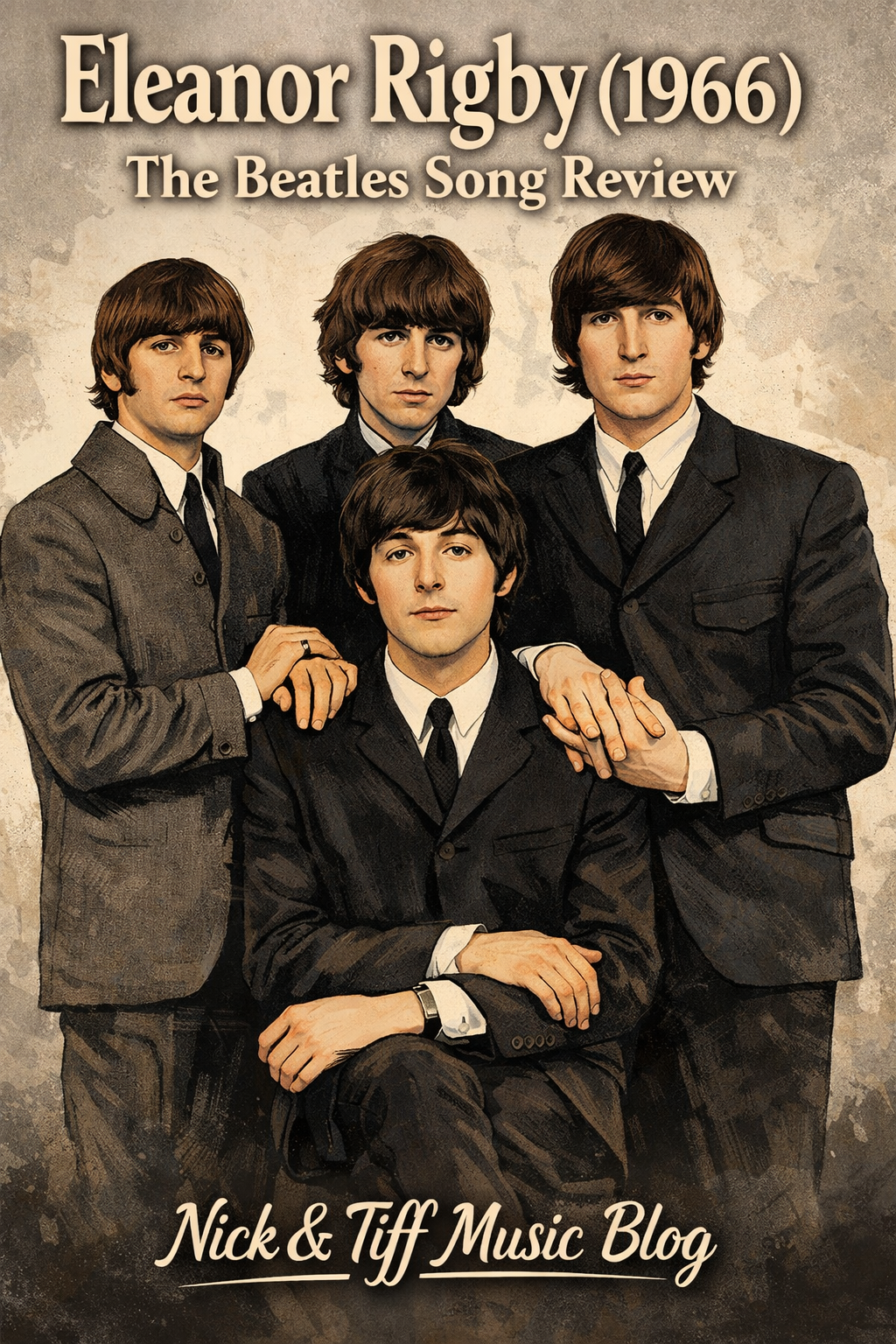
What Is “Eleanor Rigby” About?
“Eleanor Rigby” by The Beatles is about loneliness — the kind that exists quietly, unnoticed, and often unacknowledged. Through the lives of Eleanor and Father McKenzie, The Beatles explore isolation, forgotten people, and the emotional distance that can exist even within community and faith. It’s a stark reminder that some lives are lived — and ended — without anyone truly seeing them.
It still feels startling every time you hear it. Not because of volume or hooks, but because of how quietly devastating it is. In just over two minutes, The Beatles tell a story about loneliness, isolation, and forgotten lives with a level of emotional weight that most songs never reach — and they do it without guitars, drums, or anything resembling a traditional rock arrangement.
The first thing that hits you is the string octet. Sharp, urgent, almost anxious. It doesn’t comfort the listener — it presses in on you. The strings don’t float, they jab, creating tension that mirrors the emotional emptiness of the song’s characters. This wasn’t background decoration; it was the song. At the time, it felt radical, and honestly, it still does.
And beneath those urgent strings sits one of the most striking melodies ever written. It rises and falls with a kind of restrained drama — simple, direct, but impossible to forget. Even stripped of arrangement, the vocal line alone carries the emotional weight of the entire story.
Lyrically, “Eleanor Rigby” is brutal in its simplicity.
“Picks up the rice in the church where a wedding has been…”
That single line tells you everything you need to know. These are people living on the edges — unseen, unnoticed, and ultimately unloved. Father McKenzie isn’t a symbol of faith and guidance; he’s another lonely soul, preparing sermons that no one hears and tending graves no one visits.
What makes the song so powerful is that there’s no resolution. Eleanor dies alone. Father McKenzie buries her alone, and the verse lands on that cold truth: “No one was saved.” And then the song pulls back to the final refrain — “All the lonely people… where do they all belong?” — ending not with answers, but with a question that lingers long after the music stops.
Paul handles the lead vocal throughout, while John and George’s harmonies hover in the background, adding to the song’s sense of distance and emotional separation.
Explore more Beatles discussions, song meanings & reviews here.
Quick Details
Artist: The Beatles
Song: Eleanor Rigby
Album: Revolver
Released: 1966
Length: 2:08
Written by: Lennon–McCartney (Primarily Paul McCartney)
Recording Notes & Stories
Eleanor Rigby was recorded during the Revolver sessions in April 1966, and it marked one of the most dramatic departures The Beatles had ever made in the studio.
One of the boldest decisions was removing the band entirely from the track. There are no guitars, bass, or drums — just vocals and a string octet. The arrangement was written by George Martin, inspired by the sharp, aggressive string writing found in Bernard Herrmann’s film scores. Paul specifically asked that the strings be recorded without vibrato, giving them that tense, almost stabbing quality that defines the song.
Unusually for the time, the strings were close-mic’d, which made every bow scrape and attack feel immediate and slightly unsettling. Classical players weren’t used to being recorded that way, but the result was a rawness that perfectly matched the song’s themes of isolation and unease.
Lyrically, the song also evolved through collaboration. Early drafts mentioned a character named “Father McCartney,” but Paul changed it to Father McKenzie to avoid any unintended personal associations. The final verse was shaped during group discussion in the studio, with lines refined collectively — a reminder that even as The Beatles were growing more individual, moments of true collaboration still happened.
Paul later said the idea for Eleanor came from observing ordinary people and imagining the quiet sadness of lives lived largely unnoticed. The name itself was reportedly inspired by actress Eleanor Bron. A real gravestone bearing the name Eleanor Rigby was later discovered in Liverpool, and while Paul has said he doesn’t recall seeing it, he has acknowledged it may have lingered in his subconscious — a blend of memory and imagination that ultimately shaped the song.
Support Nick & Tiff Music: As an affiliate these links help support the blog at no extra cost to you-and we truly appreciate it! Thank you for supporting.
Buy The Beatles Revolver on Vinyl & CD on Amazon
Shop The Beatles Music & Merch on Amazon
Final Thoughts
“Eleanor Rigby” marked a turning point not just for The Beatles, but for popular music as a whole. It proved that a song could be literary, cinematic, and emotionally heavy — and still be unforgettable. No flash. No excess. Just human truth laid bare.
Like, comment, or share — and let us know your take in the comments.
If you enjoyed this piece, you might enjoy our weekly music discussions, song meaning breakdowns, and full track-by-track album deep dives. You can subscribe below – it’s free.
Browse our articles by Bands & Artists
Bands & Artists | Explore Music Coverage by Artist – Nick & Tiff Music Blog
Related Reads
What Is the Best Beatles Album? A Look at Their Greatest Records
Blackbird Meaning & Song Review – The Beatles (1968)
Sgt. Pepper’s Lonely Hearts Club Band Album Review #36: The Beatles’ Psychedelic Masterpiece
The Beatles – The White Album (1968) | Album Review #9
Abbey Road Album Review #27: The Beatles’ Farewell Masterpiece
The 10 Most Underrated Beatles Songs (In Chronological Order)
The Most Underrated Beatles Songs – Part 2 (11-20) (In Chronological Order)
Paul McCartney’s Home To Us Meaning: A Duet with Ringo Starr
Here Comes the Sun Meaning: The Beatles’ Song About Hope After Hard Times
The End by The Beatles Meaning: Abbey Road’s Perfect Final Message
A Day In The Life – The Beatles Song Review
In My Life by The Beatles Meaning: The Beauty Behind a Timeless Classic
Nowhere Man by The Beatles Meaning: John Lennon’s Song About Feeling Lost
Imagine (1971) Meaning & Song Review – John Lennon
Instant Karma! Meaning & Song Review – John Lennon (1970)
Same Vibes #2: Lennon & Cobain
The 10 Most Underrated Rolling Stones Songs (In Chronological Order)
The Most Underrated Rolling Stones Songs – Part 2 (11–20) (In Chronological Order)
Paint It Black (1966) – Meaning & Song Review – The Rolling Stones
Gimme Shelter (1969) Meaning & Song Review – The Rolling Stones
Beast of Burden (1978) – Meaning & Song Review – The Rolling Stones
Dead Flowers Meaning & Song Review — The Rolling Stones (1971)
The Rolling Stones – Exile on Main St. (1972) | Album Review #11
Why Keith Richards Is My Favorite Guitarist of All Time
What Is the Best Led Zeppelin Album? Exploring the Band’s Greatest Records
Going to California – Meaning & Song Review – Led Zeppelin
For more posts on The Beatles
The Beatles – Nick & Tiff Music Blog
Check out our Song Review Archives
Song Reviews | Nick & Tiff Music Blog
Explore more on the Homepage:
Nick & Tiff Music Blog – ALBUM & SONG REVIEWS – GEAR TALK & STORE UPDATES
Leave a Reply