
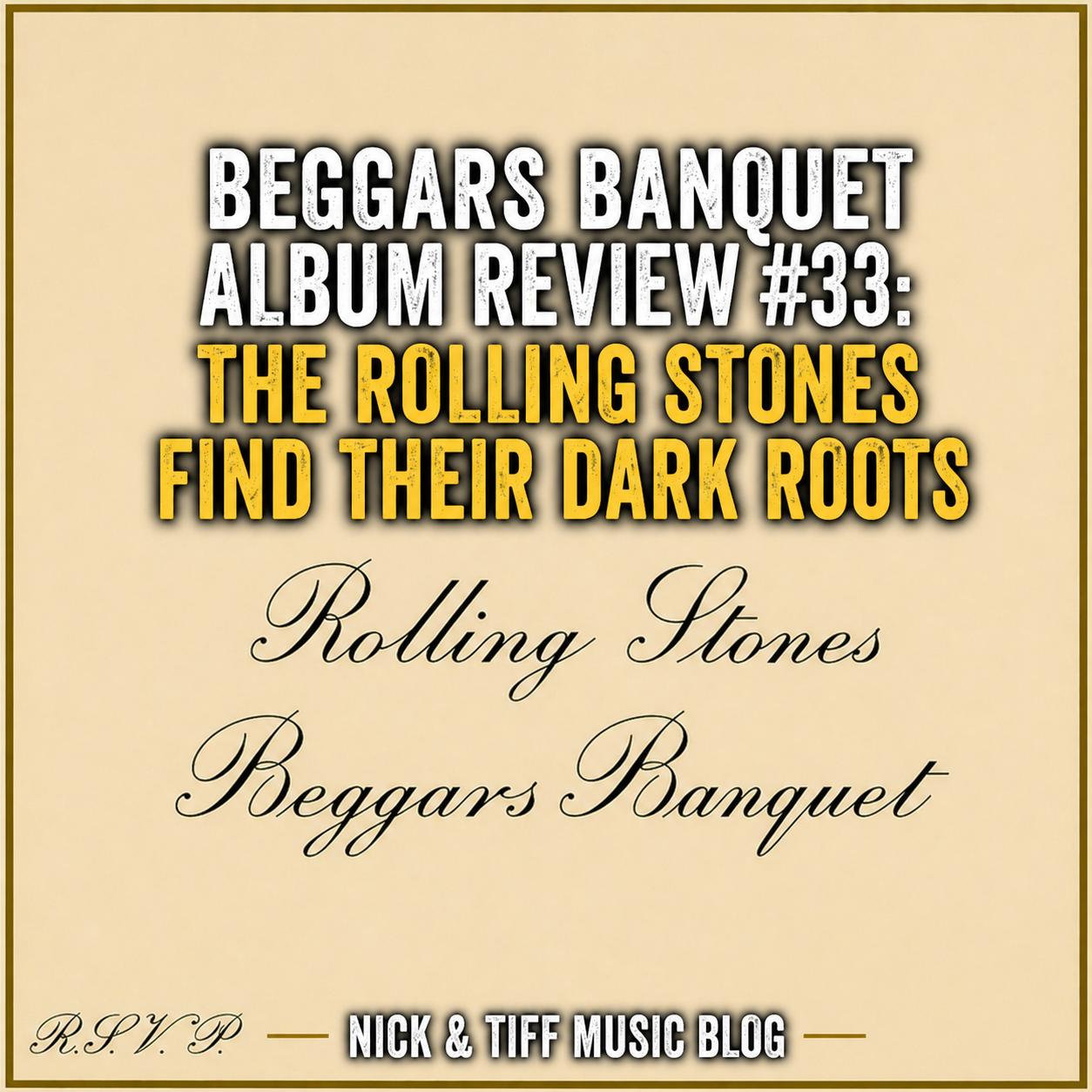
By 1968, The Rolling Stones sounded like a band finding its way back to the source. Beggars Banquet is often considered one of their most important albums, and it marks a turning point toward the blues and roots rock sound that would shape their late-1960s and early-1970s run.
After the psychedelic turn of Their Satanic Majesties Request, Beggars Banquet brings the Stones back toward blues, country, folk, and rough-edged rock and roll. But this is not just a “back to basics” album. It feels darker, wiser, and more dangerous than that.
This is the Stones leaning into acoustic and slide guitars, piano, percussion, and blues tradition while still sounding completely like themselves. It is earthy, tense, sarcastic, vulnerable, and at times almost haunted.
Quick Details
- Album: Beggars Banquet
- Artist: The Rolling Stones
- Released: December 6, 1968
- Length: 39:43
- Genre: Blues Rock, Roots Rock, Country Blues
- Producer: Jimmy Miller
- Key Tracks: “Sympathy for the Devil,” “No Expectations,” “Street Fighting Man,” “Jigsaw Puzzle,” “Salt of the Earth”
Beggars Banquet Track-by-Track Review
1. Sympathy for the Devil
“Sympathy for the Devil” opens the album with one of the most unforgettable introductions in the Stones’ catalog.
The song builds around percussion, piano, bass, and Mick Jagger’s chilling narrator, who presents evil not as a monster hiding in the shadows, but as something woven through history and human behavior. That is what makes the song so powerful. It is not scary because it feels supernatural. It is scary because it feels human.
Musically, it does not sound like a typical rock opener. It moves with a hypnotic rhythm, almost like a ritual, and the “woo-woo” backing vocals give it a strange, unforgettable atmosphere. It is bold, theatrical, and still one of the clearest examples of the Stones turning darkness into something musically alive.
Read more on “Sympathy for the Devil” in our deep dive song review.
Sympathy for the Devil Meaning: The Rolling Stones’ Song About Blame, Evil, and Human Responsibility
2. No Expectations
“No Expectations” is one of the most vulnerable songs on Beggars Banquet.
After the menace of “Sympathy for the Devil,” this track pulls everything inward. It is about heartbreak and the realization that what you once had is no longer. The song does not need to overexplain the pain. It just sits with it.
Brian Jones’ slide guitar gives the track its aching beauty. It feels fragile, almost like it is drifting away while you listen to it. Jagger’s vocal is restrained, which makes the emotion hit harder. Nothing feels forced. The sadness comes through naturally.
This is one of those Stones songs that proves how powerful they could be when they let the quieter side of the band take over.
Explore “No Expectations” further in our song review here:
No Expectations Meaning & Song Review: The Rolling Stones at Their Most Vulnerable
3. Dear Doctor
“Dear Doctor” brings in the Stones’ country-blues humor, but there is also something strange and uneasy about it.
The exaggerated vocal style and loose acoustic feel make the song sound playful on the surface, but underneath that is a story about panic, escape, and not wanting the life that has been planned for you. It has that old-time country character-song feeling, where the performance is part of the storytelling.
“Dear Doctor” helps widen the world of Beggars Banquet. The Stones are not just playing blues rock here. They are digging into older American sounds and bending country blues into their own strange, theatrical personality.
4. Parachute Woman
“Parachute Woman” is short, gritty, and full of blues attitude.
The song has a swampy, compressed feel, almost like it is coming through an old speaker in the corner of a room. It does not need a huge arrangement. The groove, harmonica, and vocal delivery do most of the work.
This is the Stones sounding loose in the best way. It feels like a direct line back to the blues records that shaped them, but it still has that sneaky late-60s Stones edge. It is raw, simple, and effective.
5. Jigsaw Puzzle
“Jigsaw Puzzle” is about trying to make sense of a chaotic world full of strange people, hidden motives, and social performance. The narrator watches the scene around him almost like an observer at a circus, taking in soldiers, ladies, gangsters, preachers, and other figures who all seem to represent different pieces of society.
Musically, the song has a loose, rolling feel that matches the scattered imagery. There is also a bit of a Bob Dylan feel to it, especially in the way Jagger moves through strange characters and social scenes without stopping to explain every image. The slide guitar, piano, and rhythm section keep it moving, while the song builds a picture out of pieces that never fully settle into one simple meaning.
That makes it one of the album’s most interesting deep cuts. It may not hit as instantly as “Sympathy for the Devil” or “Street Fighting Man,” but it adds a lot to the strange, dusty world of Beggars Banquet.
Jigsaw Puzzle Lyrics Meaning: The Rolling Stones’ Sharp, Surreal Portrait of Chaos
6. Street Fighting Man
“Street Fighting Man” is one of the defining songs on Beggars Banquet.
The acoustic guitar attack is what makes it so exciting. It has the force of a rock song, but it is built in a way that feels rougher and more unusual than a standard electric anthem. The track sounds like it is bursting at the seams.
Lyrically, it captures the unrest of the late 1960s without turning into a simple slogan. Jagger’s vocal sounds caught between excitement, frustration, and distance. That tension gives the song its bite.
It is political, but it is also very much a Rolling Stones song: rhythmic, dangerous, and full of attitude.
Read more on “Street Fighting Man” in our deep dive song review.
Street Fighting Man by The Rolling Stones Meaning: Revolution, Frustration, and Rock and Roll
7. Prodigal Son
“Prodigal Son” takes the album deeper into country blues.
The performance feels stripped down and traditional, with acoustic guitar and vocal carrying most of the weight. It fits naturally on Beggars Banquet because the whole album feels connected to older roots music.
What makes it work is that the Stones do not polish it too much. They let it sound plain, direct, and lived-in. It gives the second half of the album a more spiritual, front-porch feeling before the darker material returns.
8. Stray Cat Blues
“Stray Cat Blues” is one of the album’s darkest and most uncomfortable tracks.
Musically, it is incredible: heavy, sleazy, and crawling with tension. The guitar tone and rhythm give it a nasty edge, and Jagger’s vocal performance leans fully into the character of the song.
At the same time, the lyrics are disturbing, especially listening today. That makes it a difficult song to talk about because the music is so powerful, but the subject matter is intentionally ugly and hard to separate from the performance.
As a piece of the album’s atmosphere, it pushes Beggars Banquet into dangerous territory. It shows the Stones exploring the darker side of desire, power, and character-driven songwriting, even when the result is unsettling.
9. Factory Girl
“Factory Girl” is one of the most charming left turns on the album.
It has a loose folk-country feel, with fiddle, mandolin, and percussion giving it a ragged, almost homemade sound. After the darkness of “Stray Cat Blues,” this song feels lighter, but not polished. It still belongs to the same dusty world.
There is something casual and almost tossed-off about it, but that is part of the appeal. The Stones sound like they are having fun with old folk and country textures without trying to make the song bigger than it needs to be.
It adds color and personality to the album.
10. Salt of the Earth
“Salt of the Earth” closes Beggars Banquet with a song that feels both humble and complicated.
Keith Richards opens the track on lead vocal, which immediately gives it a raw intimate feel. When Jagger comes in, the song expands into something larger, eventually building toward a gospel-like ending.
On the surface, it sounds like a tribute to working people. But like many Stones songs, it is not that simple. There is admiration there, but also distance and ambiguity. That tension makes it more interesting than a straightforward anthem.
As a closer, it works beautifully. After an album full of devils, heartbreak, unrest, blues characters, and dark corners, “Salt of the Earth” ends with something communal and human.
Support Nick & Tiff Music: As an affiliate these links help support the blog at no extra cost to you-and we truly appreciate it! Thank you for supporting.
Buy Beggars Banquet on Vinyl & CD
Shop Rolling Stones Music, Books & Merch
Final Thoughts
Beggars Banquet is the sound of The Rolling Stones becoming more grounded and more dangerous at the same time.
The album strips away a lot of the psychedelic decoration from the previous era and replaces it with acoustic grit, blues feeling, country textures, and sharper songwriting. It feels like the beginning of a new chapter for the band.
What stands out most is how much space the album has. Not every song is trying to explode. Some of the best moments come from restraint: the slide guitar on “No Expectations,” the acoustic drive of “Street Fighting Man,” the strange rolling movement of “Jigsaw Puzzle,” and the slow build of “Salt of the Earth.”
For me, Beggars Banquet works because it feels alive. It is messy in places, dark in places, funny in places, and beautiful in places. That mix is exactly what makes it such an important Rolling Stones album.
Like, comment, or share — and let me know your thoughts on this iconic Stones record.
If you enjoyed this piece, you might enjoy our weekly music discussions, song meaning breakdowns, and full track-by-track album deep dives. You can subscribe below – it’s free.
FAQ About Beggars Banquet
What is Beggars Banquet by The Rolling Stones known for?
Beggars Banquet is known for bringing The Rolling Stones back toward blues, country, folk, and roots rock after their psychedelic period. It includes major songs like “Sympathy for the Devil,” “Street Fighting Man,” and “No Expectations.”
Why is Beggars Banquet important?
The album helped start one of the strongest creative periods of The Rolling Stones’ career. It showed the band moving into a darker, rootsier sound that would continue through albums like Let It Bleed, Sticky Fingers, and Exile on Main St.
What is the best song on Beggars Banquet?
Many fans point to “Sympathy for the Devil,” “Street Fighting Man,” or “No Expectations,” depending on what side of the Stones they connect with most. The album works so well because those songs show very different strengths of the band.
Is Beggars Banquet blues rock?
Yes, but it is not only blues rock. The album also includes country blues, folk, acoustic rock, gospel influence, and roots music textures. That variety is a big part of why it still feels so rich.
Explore more by Artist.
Bands & Artists | Explore Music Coverage by Artist – Nick & Tiff Music Blog
More From Nick & Tiff Music Blog
The Rolling Stones’ Current Run with Hackney Diamonds and Foreign Tongues Is Incredible
Dreamy Skies by The Rolling Stones Meaning: A Country-Blues Escape From the Noise
What Is The Best Rolling Stones Album? Here’s What Each One Does Best
Foreign Tongues Album Review #44: The Rolling Stones Are on an Incredible Run
The 10 Most Underrated Rolling Stones Songs (In Chronological Order)
In The Stars by The Rolling Stones Meaning: Fate, Luck, and Stones Swagger
Rough and Twisted by The Rolling Stones Meaning: New Stones With A Classic Stones Sound
The Most Underrated Rolling Stones Songs – Part 2 (11–20) (In Chronological Order)
Let It Bleed Album Review #28: The Rolling Stones’ Dark and Dangerous Masterpiece
Tumblin’ Dice Lyrics Meaning: The Rolling Stones Song About Risk and Desire
The Rolling Stones – Exile on Main St. (1972) | Album Review #11
Honky Tonk Women by The Rolling Stones: The Story Behind the Swagger
What Is “Loving Cup” About? The Rolling Stones’ Warm and Soulful Gem
Shine A Light Lyrics Meaning: The Rolling Stones’ Gospel Tribute to Brian Jones
Monkey Man Lyrics Meaning: The Rolling Stones Mock Their Own Reputation
Sticky Fingers Album Review #23: The Rolling Stones at Their Absolute Peak
Moonlight Mile Lyrics Meaning: The Rolling Stones’ Most Reflective Song
Jigsaw Puzzle Lyrics Meaning: The Rolling Stones’ Sharp, Surreal Portrait of Chaos
Sympathy for the Devil Meaning: The Rolling Stones’ Song About Blame, Evil, and Human Responsibility
No Expectations Meaning & Song Review: The Rolling Stones at Their Most Vulnerable
Shattered Lyrics Meaning: The Rolling Stones’ Take on NYC in the 70s
Jumpin’ Jack Flash Lyrics Meaning: The Rolling Stones Turn Struggle Into Swagger
Street Fighting Man by The Rolling Stones Meaning: Revolution, Frustration, and Rock and Roll
Paint It Black (1966) – Meaning & Song Review – The Rolling Stones
Gimme Shelter (1969) Meaning & Song Review – The Rolling Stones
Beast of Burden (1978) – Meaning & Song Review – The Rolling Stones
Doo Doo Doo Doo Doo (Heartbreaker) Meaning: The Rolling Stones’ Dark Song About Violence and Power
100 Years Ago Lyrics Meaning: The Rolling Stones Song About Growing Older
Why Keith Richards Is My Favorite Guitarist of All Time
One of the Most Underrated Rolling Stones Songs: Saint of Me (1997)
Hackney Diamonds: Why the Rolling Stones’ Latest Album Is Their Most Underrated
Same Vibes #9: Mick Jagger & Steven Tyler
What Is the Best Beatles Album? A Look at Their Greatest Records
What Is the Best Bob Dylan Album? A Look at the Legendary Songwriter’s Greatest Records
What Is the Best Bruce Springsteen Album? A Look at His Greatest Records
What Is the Best Neil Young Album? A Look at His Greatest Records
What Is the Best Led Zeppelin Album? Exploring the Band’s Greatest Records
What Is The Best Tom Petty Album? Exploring His Greatest Records
The 10 Most Underrated Beatles Songs (In Chronological Order)
The Beatles – The White Album (1968) | Album Review #9
Check out our Album Review Archives Page here:
Album Reviews | Nick & Tiff Music Blog
Explore more on the Homepage:
Nick & Tiff Music Blog – ALBUM & SONG REVIEWS – GEAR TALK & STORE UPDATES
Leave a Reply