
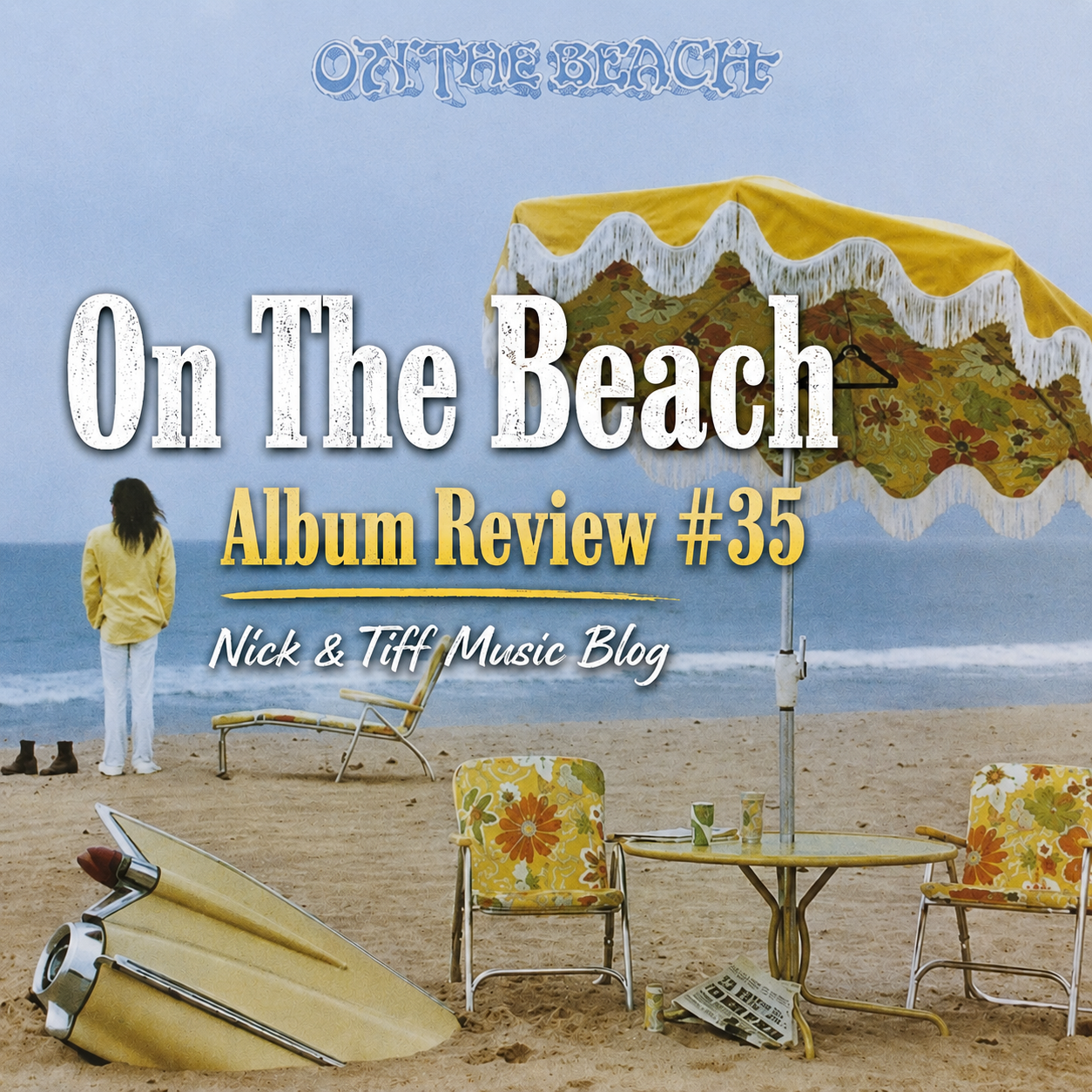
What Is On The Beach About?
On The Beach is Neil Young sounding tired, angry, lonely, sarcastic, and strangely calm all at once. Released in 1974, it came after the massive success of Harvest, but it does not feel like an artist trying to repeat a hit. It feels like someone walking away from the middle of the road and heading somewhere darker, quieter, and much less comfortable.
That is what makes this album so powerful. On The Beach is not packed with obvious singles or big crowd-pleasing moments. It moves slowly. It feels sunburned, paranoid, and worn out. But the more time you spend with it, the more it starts to feel like one of Neil Young’s most honest albums.
This is the sound of fame not feeling like freedom. It is the sound of success becoming heavy. And in true Neil Young fashion, he does not polish those feelings up to make them easier to take.
Explore more Neil Young discussions, song meanings & reviews here.
Quick Details
- Artist: Neil Young
- Album: On The Beach
- Album Review #: 35
- Released: July 1974
- Label: Reprise Records
- Genre: Folk rock, country rock, blues rock
- Length: 39:40
- Key Songs: “Walk On,” “Revolution Blues,” “On The Beach,” “Ambulance Blues”
- Overall Feel: Dark, dusty, loose, bitter, beautiful, and deeply human
On The Beach Track-by-Track Review
1. Walk On
“Walk On” opens On The Beach with Neil Young directly responding to the criticism and pressure around him at the time. After the huge success of Harvest, fans, critics, and record executives wanted him to stay in that softer, more commercial lane, but Neil was already moving somewhere darker and less predictable.
The song feels like his answer to all of that. He knows people are talking, judging, and trying to pull him back toward what already worked, but he is basically saying he has to keep moving anyway. That is what makes “Walk On” such a strong opener. It has an upbeat groove, but the message underneath is stubborn and defiant.
Musically, it is one of the more accessible songs on the album, which makes the contrast interesting. It sounds loose and catchy, but it sets up the whole record’s attitude: Neil is not going to chase another Harvest. He is just going to walk on.
Explore “Walk On” further in our deep dive song review.
Walk On by Neil Young Meaning: How He Responded to Criticism After Harvest
2. See the Sky About to Rain
“See the Sky About to Rain” is one of the album’s most beautiful songs, but it still carries that heavy On The Beach feeling. The title says a lot by itself. Neil Young sounds like he can see something coming, and even if he cannot stop it, he can feel the weight of it before it arrives.
The song uses the image of rain like a warning sign. It feels like change, disappointment, and hard times gathering in the distance. But Neil does not oversell it. The song stays calm, which almost makes it sadder. It feels resigned instead of dramatic.
Musically, it has a soft, worn-in sound that fits the album perfectly. The Wurlitzer and steel guitar give it a lonely country-rock feel, and the whole track feels like a gray sky slowly rolling in.
It is a quieter song, but it adds a lot to the record. On an album about disillusionment, fame, loneliness, and trying to keep going, “See the Sky About to Rain” feels like the moment where Neil simply looks up and knows the storm is coming.
3. Revolution Blues
“Revolution Blues” is one of the darkest songs on On The Beach, and the real-life story behind it makes it even more unsettling. Neil Young is writing from the perspective of Charles Manson, the mass murderer and cult leader he had actually crossed paths with in Los Angeles before the murders.
That detail gives the song a disturbing edge. Neil is not glorifying Manson. He is stepping into that kind of paranoid, violent mindset to show how ugly the end of the 1960s had become. The references to Laurel Canyon make it even creepier because this was the heart of the L.A. music scene, where so many artists were living, writing, and trying to hold onto the dream.
Musically, the song has a nervous, dangerous drive. With Levon Helm and Rick Danko from The Band, along with David Crosby, the track feels loose but tense, like it could fall apart at any second.
On an album full of disillusionment, “Revolution Blues” is where that darkness turns threatening. It is Neil looking at the broken side of the counterculture and turning it into one of his most chilling songs.
4. For the Turnstiles
“For the Turnstiles” is a strange, stripped-down song, but it fits On The Beach perfectly. With its banjo-driven sound, it almost feels old-fashioned at first, but underneath that loose folk-rock feel is a pretty cynical look at fame and the music business.
Neil seems to be writing about musicians chasing success, playing for whoever is taking money at the door, and trying to “make it” in a world that can chew artists up pretty quickly. The turnstiles become a symbol for the business side of music, where art, crowds, money, and disappointment all meet in the same place.
That is what makes the song work. It is short and simple, but it carries that same worn-out feeling as the rest of the album. Neil is not romanticizing the dream here. He is looking at the cost of chasing it.
5. Vampire Blues
“Vampire Blues” is Neil Young taking direct aim at the oil industry. The “vampire” is a symbol for oil companies and the people draining the earth for profit.
That makes the song feel sharper than it first appears. On the surface, it has a loose, bluesy groove, almost like Neil is having fun with the idea. But underneath that is a pretty clear environmental warning. He is writing about greed, pollution, and the way powerful industries take what they want while everyone else has to live with the damage.
The song fits On The Beach because it adds another kind of darkness to the album. Some songs are about fame, paranoia, or personal exhaustion, but “Vampire Blues” looks outward. It shows Neil’s anger at the world around him, and he keeps it simple enough that the message lands right away.
It is one of the more underrated tracks here because it adds a lot to the album’s personality.
Read more on “Vampire Blues” in our deep dive song review.
Vampire Blues Lyrics Meaning: Neil Young’s Sharp Attack on Greed and the Oil Industry
6. On The Beach
“On The Beach” is Neil Young writing directly about the pressure, isolation, and emotional exhaustion that came with fame after Harvest turned him into a superstar. Instead of embracing that success, he sounds like someone who wants to disappear from it.
The title track captures that conflict perfectly. Neil sings about needing people around him while also feeling unable to face them. There is loneliness all over this song, but also frustration with the music industry, celebrity culture, and the feeling of becoming disconnected from himself.
Musically, the song moves slowly and almost feels emotionally drained, which is exactly why it works. The loose groove, empty space, and hazy guitar lines make the whole track feel isolated, like Neil is lost in his own thoughts.
That is what makes “On The Beach” such a powerful centerpiece. This is not Neil Young celebrating success. It is Neil questioning what success was doing to him mentally and emotionally, and turning those feelings into one of the most honest songs of his career.
Read more on the title track in our deep dive song review.
On the Beach by Neil Young Meaning: Fame, Burnout, and Wanting to Disappear
7. Motion Pictures
“Motion Pictures” is Neil Young writing about his relationship with actress Carrie Snodgress, and that real-life connection makes the song feel even more personal. It sounds like a quiet letter to someone he loves, but it also carries distance, distrust, and the feeling that the relationship is starting to slip away.
The Hollywood connection matters too. Carrie had left that world behind to live with Neil, and the song seems caught between wanting a simpler life and feeling the weight of everything around them. It is tender, but it is not fully peaceful.
Musically, “Motion Pictures” has a slow, dreamy feel that fits the sadness of the song. It almost sounds half-awake, like Neil is singing from inside his own thoughts.
On an album full of bitterness and disillusionment, this is one of the most vulnerable moments. It is not as sharp as “Revolution Blues” or as heavy as “On The Beach,” but it shows the personal side of the same exhaustion.
8. Ambulance Blues
“Ambulance Blues” closes On The Beach with Neil Young looking back on the collapse of the 1960s dream, his own personal losses, and the emotional burnout he was going through at the time. It is one of the most reflective songs he ever wrote, but also one of the most bitter.
The song touches on everything from Richard Nixon and Watergate to the deaths of friends like Danny Whitten and Bruce Berry. There is nostalgia here, but Neil is not romanticizing the past. He sounds disillusioned with the world around him and exhausted by what fame, loss, and the music industry had turned into.
At nearly nine minutes long, the song drifts like a memory. Neil jumps between personal reflections, political frustration, and sharp observations about the changing culture around him. That loose structure is part of what makes it feel so honest.
As a closing track, “Ambulance Blues” feels like the final statement of the entire album. On The Beach is full of loneliness, paranoia, and emotional exhaustion, and this song gathers all of those feelings together into one long, haunting goodbye to an era Neil no longer believed in.
Support Nick & Tiff Music: As an affiliate these links help keep the blog going at no extra cost to you, and we truly appreciate it! Thank you for supporting.
Buy On The Beach on Vinyl & CD
Shop Neil Young Vinyl, CDs, Books & Merch
Final Thoughts
On The Beach is not Neil Young trying to repeat the success of Harvest. That is what makes it so great. Even after becoming one of the biggest artists in the world, Neil kept moving further into darker and less commercial territory instead of giving fans, critics, and record executives the safe album they may have wanted.
This album feels like Neil looking at fame, the music business, the broken promises of the 1960s, and his own personal life without trying to make any of it sound prettier than it was. Some songs are bitter. Some are lonely. Some are angry. But all of them feel real.
As a fan, that is what makes On The Beach so rewarding. It may not be the easiest Neil Young album to start with, but it is one of the albums that shows why he matters so much. He was willing to follow the truth of where he was, even when that truth was uncomfortable.
That is why On The Beach still hits so hard. It is dusty, worn down, and emotionally heavy, but it is also one of Neil Young’s most powerful records.
If you enjoyed this piece, you might enjoy our weekly music discussions, song meaning breakdowns, and full track-by-track album deep dives. You can subscribe below – it’s free.
FAQ About On The Beach by Neil Young
When was On The Beach released?
On The Beach was released in July 1974.
Is On The Beach one of Neil Young’s darker albums?
Yes. It is one of his darker and more withdrawn albums, especially compared to the more accessible sound of Harvest.
Why is On The Beach so respected by Neil Young fans?
It is respected because it feels so honest and uncompromising. Neil Young does not chase a hit here. He follows the mood of the album wherever it leads.
Is On The Beach a good album for new Neil Young listeners?
It can be, but it may work better after hearing albums like After the Gold Rush or Harvest. This one is darker, slower, and more emotionally heavy.
Browse our articles by Bands & Artists:
Bands & Artists | Explore Music Coverage by Artist – Nick & Tiff Music Blog
Related Reads
What Is the Best Neil Young Album? A Look at His Greatest Records
Walk On by Neil Young Meaning: How He Responded to Criticism After Harvest
Vampire Blues Lyrics Meaning: Neil Young’s Sharp Attack on Greed and the Oil Industry
On the Beach by Neil Young Meaning: Fame, Burnout, and Wanting to Disappear
Old Man Lyrics Meaning: Neil Young’s Reflection on Time, Youth, and Perspective
After the Gold Rush Lyrics Meaning: Neil Young’s Dreamlike Vision of the Past and Future
Hey Hey, My My (Into the Black) Meaning & Song Review: Neil Young’s Loudest Statement on Rock
Cinnamon Girl Lyrics Meaning: Neil Young’s Fever Dream Love Song Explained
Down by the River Lyrics Meaning: The Dark Story Behind Neil Young’s Classic
Same Vibes #4: Eddie Vedder & Neil Young
What Is the Best Bob Dylan Album? A Look at the Legendary Songwriter’s Greatest Records
What Is The Best Rolling Stones Album? Here’s What Each One Does Best
What Is the Best Bruce Springsteen Album? A Look at His Greatest Records
What Is the Best Beatles Album? A Look at Their Greatest Records
What Is the Best Led Zeppelin Album? Exploring the Band’s Greatest Records
What Is The Best Tom Petty Album? Exploring His Greatest Records
What Is the Best White Stripes Album? A Look at Every Era of Their Raw Garage Rock Genius
Blackbird Meaning & Song Review – The Beatles (1968)
Dead Flowers Meaning & Song Review — The Rolling Stones (1971)
Paint It Black (1966) – Meaning & Song Review – The Rolling Stones
Going to California Meaning: The Story Behind Led Zeppelin’s Acoustic Masterpiece
Bruce Springsteen – Born to Run (1975) Album Review #4
Thunder Road (1975) – Meaning & Song Review – Bruce Springsteen
The 10 Most Underrated Beatles Songs (In Chronological Order)
The Beatles – The White Album (1968) | Album Review #9
The 10 Most Underrated Rolling Stones Songs (In Chronological Order)
Tangled Up in Blue (1975) Meaning & Song Review – Bob Dylan
The Freewheelin’ Bob Dylan (1963) – Bob Dylan | Album Review #12
Ballad of a Thin Man (1965) Meaning & Song Review – Bob Dylan
A Hard Rain’s A-Gonna Fall – Bob Dylan (1963) Meaning & Song Review
From Dylan to Springsteen to Zach Bryan: The Lineage of the American Songwriter
Zach Bryan – With Heaven on Top (2026) | Album Review #6
Zach Bryan – (Self-Titled) (2023) Album Review #5
Something in the Orange (2022) – Meaning & Song Review – Zach Bryan
Check out our Album Review Archives Page here:
Album Reviews | Nick & Tiff Music Blog
Explore more on the Homepage:
Nick & Tiff Music Blog – ALBUM & SONG REVIEWS – GEAR TALK & STORE UPDATES
Leave a Reply