
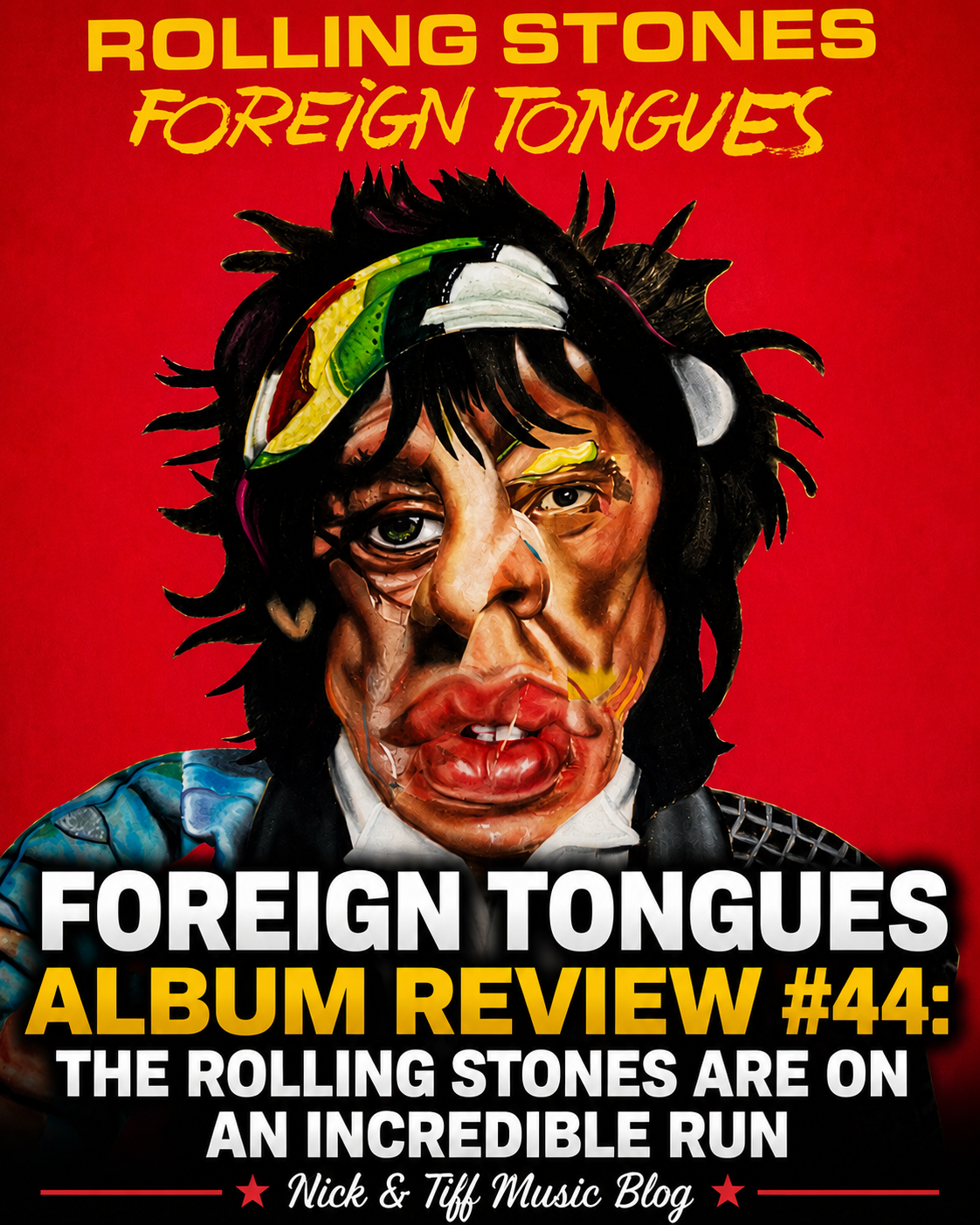
The Rolling Stones are in an incredible groove right now. After Hackney Diamonds proved they could still make a vital, exciting modern Stones album, Foreign Tongues keeps that momentum going with another remarkably strong collection of songs.
What impresses me most about Foreign Tongues is how well-rounded it feels. The album moves through blues, country, soul, dance-rock, boogie and straight-ahead rock—the different musical styles that have helped shape the Stones’ sound over the years—and they still sound completely at home in all of them.
Certain songs may remind longtime fans of albums such as Let It Bleed, Sticky Fingers, Exile on Main St., Some Girls, Emotional Rescue and Hackney Diamonds, but it never feels like the band is deliberately trying to recreate those eras. These styles simply remain part of who The Rolling Stones are and hearing them sound this good today across all of them is what makes Foreign Tongues so impressive.
For more deep dives like this visit our Rolling Stones Page:
The Rolling Stones – Nick & Tiff Music Blog
Quick Details
- Artist: The Rolling Stones
- Released: July 10, 2026
- Studio album: 25th
- Producer: Andrew Watt
- Label: Polydor Records
- Number of tracks: 14
- Running time: Approximately 1 hour and 2 minutes
- Featured musicians: Paul McCartney, Steve Winwood, Robert Smith, Bruno Mars, Chad Smith and Charlie Watts
- Musical styles: Rock, blues, country, punk, soul, dance-rock and rock ballads
Foreign Tongues was released as a 14-song companion to 2023’s Hackney Diamonds, with Mick Jagger, Keith Richards and Ronnie Wood describing it as another energetic chapter rather than a quiet closing statement.
Foreign Tongues Tracklist
- Rough and Twisted
- In the Stars
- Jealous Lover
- Mr Charm
- Divine Intervention
- Ringing Hollow
- Never Wanna Lose You
- Hit Me in the Head
- You Know I’m No Good
- Some of Us
- Covered in You
- Side Effects
- Back in Your Life
- Beautiful Delilah
Get new posts sent to your email. Subscribing is free and you can always opt-out if it’s not for you. Subscribe here:
The Story Behind Foreign Tongues
Although Foreign Tongues followed Hackney Diamonds by nearly three years, the two albums are closely connected. Keith Richards has said that the band completed so much work during the Hackney Diamonds period that he and Andrew Watt began looking at the material almost like a double album that would be released in two stages.
The band also changed the way it approached the newer sessions. Instead of spending long nights attempting to build unfinished ideas inside the studio, the Stones came in with songs and moved through them quickly. Mick Jagger described it as a “bulldozer” approach: record the ideas while the excitement is still there before everyone has time to overthink them.
Andrew Watt wanted the playing to remain as natural as possible. The main sessions took place at Metropolis Studios in London during one continuous month, followed by another month of overdubs. The musicians played together in the room without a click track, often repeating a song for an hour while Watt kept the tape running. That allowed Keith Richards and Ronnie Wood to react to each other in real time rather than constructing the guitar parts separately.
That approach is important because Foreign Tongues covers so many different styles. The live recording process gives every song the same heartbeat, whether the band is leaning into blues, country, punk, soul, dance-rock or straight-ahead rock.
It does not feel like The Rolling Stones are intentionally trying to revisit different eras of their career. It feels more natural than that. These are simply the different styles that have always helped make them who they are.
For longtime Stones fans, that variety is part of what makes the album so rewarding. Certain songs may bring back the feeling of albums such as Sticky Fingers, Exile on Main St., Some Girls, Emotional Rescue or Hackney Diamonds, especially for listeners who have a special place in their hearts for those records. But Foreign Tongues still feels like its own album rather than an attempt to recreate any one period from the past.
Support Nick & Tiff Music: As an affiliate these links help support the blog at no extra cost to you-and we truly appreciate it! Thank you for supporting.
Buy Foreign Tongues Vinyl & CD on Amazon
Shop Rolling Stones Music, Books & Merch on Amazon
If you haven’t heard of nugs yet, it is an awesome platform for music lovers with Livestream Concerts and a growing collection of archived concerts to watch and listen too.
Foreign Tongues Track-by-Track Review
1. Rough and Twisted
“Rough and Twisted” immediately establishes the loose, blues-heavy atmosphere that runs through much of the album. The guitar parts do not feel locked into perfectly separated roles. Keith Richards and Ronnie Wood are constantly weaving around each other, creating the kind of controlled looseness that has always been essential to the Stones.
This track has a strong Exile on Main St. feel to me. It carries that same dusty, lived-in quality. The riff, harmonica and rolling rhythm make it sound like something created by a band gathered in one room rather than a production assembled piece by piece.
Keith Richards believed the song had to open the album because its Chicago blues character immediately stated what the record was about. He also singled out Mick Jagger’s harmonica playing as one of the defining parts of the track.
Andrew Watt deserves credit for allowing the song to stay rough around the edges. He gives the guitars enough weight to sound modern without cleaning away the natural movement between the musicians. That balance makes “Rough and Twisted” an ideal introduction to the album.
Explore “Rough and Twisted” further with our deep dive song review here:
Rough and Twisted by The Rolling Stones Meaning: New Stones With A Classic Stones Sound
2. In the Stars
“In the Stars” expands the sound considerably. Where the opening track feels like a blues band working inside a crowded room, this one reaches for something larger and more anthemic.
The verses carry some darkness, but the chorus opens the song up. The backing vocals and gradually building arrangement give it the size of a modern Stones arena song. It feels closely connected to Hackney Diamonds, especially in the way Andrew Watt combines the band’s familiar guitar sound with a bigger and more polished chorus.
Jagger also sounds especially strong here. He moves between the lower verses and the more forceful chorus without making the song feel strained. The arrangement continues building around him, with the guitars becoming increasingly active as the track moves forward.
“In the Stars” is a good early example of why the album works. It follows a loose blues-rock opener with something more melodic and expansive, immediately showing that Foreign Tongues is going to keep changing shape.
Read more on “In the Stars” with our song review and review of the AI Music Video here:
In The Stars by The Rolling Stones Meaning: Fate, Luck, and Stones Swagger
In the Stars by The Rolling Stones Music Video Review
3. Jealous Lover
“Jealous Lover” is the clearest connection to Emotional Rescue. Jagger’s falsetto, the relaxed funk rhythm and Steve Winwood’s electric piano and organ create the kind of late-night groove the Stones explored during the late ’70s and early ’80s.
The music is smooth, but the emotion underneath it is uneasy. Jealousy creates tension between two people even when neither one seems willing to fully walk away. Jagger’s falsetto gives the narrator a combination of confidence and vulnerability that fits that conflict perfectly.
Jagger originally built the song around a simple drum-machine groove before the rest of the band turned it into a complete Stones performance. Winwood’s keyboards add warmth and soul without overwhelming the guitars.
“Jealous Lover” has clear echoes of songs like “Miss You” and “Emotional Rescue,” but it still has its own melody, mood and personality. The Stones are not trying to recreate one specific older song. They are simply returning to a style that has always been part of their sound and making it feel natural again.
Read our deep dive song review of “Jealous Lover” here:
4. Mr Charm
At its heart, “Mr Charm” is about enjoying life with another person on a real level rather than building the entire experience around money, status and superficial displays of wealth.
The narrator presents an evening with him as something more personal and genuine. That stands in contrast to billionaires such as Elon Musk, who are directly mocked in the song and seem able to use money and influence to get whatever they want. The narrator is not necessarily pretending he has no money of his own. The difference is that he is trying to make an actual connection rather than treating the woman as another possession.
Musically, the track is built around groove. Jagger delivers parts of the vocal in a rhythmic, almost spoken style while Keith and Ronnie slide their guitars around the drums and bass. Jagger has explained that Richards created the central guitar lick after hearing the demo, helping transform the original idea into a full group performance.
“Mr Charm” has the attitude of the late-’70s Stones, but its subject is completely current. It is funny, sharp and observant without losing the looseness that makes it work as a rock song.
Explore Mr Charm further here:
Mr Charm by The Rolling Stones Meaning: Mick Jagger’s Shot at Billionaire Romance
5. Divine Intervention
“Divine Intervention” has a loose, upbeat boogie-rock feel with plenty of movement in the guitars. Keith Richards and Ronnie Wood play off each other naturally, while Steve Winwood’s piano and organ add warmth and help fill out the arrangement. The horns give the song another lift without taking anything away from its gritty Stones character.
Mick Jagger sounds like he is having a lot of fun with the song’s strange, playful energy. Robert Smith’s additional guitar also fits in naturally, adding another interesting texture without distracting from the band.
The song has a definite late-’70s Some Girls feel to me, especially in the way it combines swagger, groove and slightly reckless energy. It has that fast-moving, street-level Stones attitude where everything feels a little wild but still completely locked into the rhythm.
Read our song review of “Divine Intervention” here:
Divine Intervention by The Rolling Stones Meaning: Embracing Life with a Late-70s Stones Vibe
6. Ringing Hollow
“Ringing Hollow” begins like a love song before gradually revealing that the subject is America. Jagger uses Liberty as both a woman and a symbol of the country, allowing the meaning to unfold slowly rather than stating it outright.
The Stones have always had a deep connection to American music and culture, but the song looks at the modern United States with a mixture of love, concern and disappointment. Keith Richards’ explanation feels less like the band discovering flaws in America for the first time and more like watching a country they have admired for decades change into something harder to recognize.
The country-influenced arrangement gives that message even more weight. Rather than delivering it through an angry rocker, the Stones use one of the most American musical styles they have embraced throughout their career. It gives “Ringing Hollow” a warm, reflective sound even as the lyrics question what America has become.
It has the kind of warm, rootsy feel that brings Sticky Fingers and Exile on Main St. to mind.
Read our full deep dive song review of “Ringing Hollow” here:
Ringing Hollow by The Rolling Stones Meaning: How America Has Changed
7. Never Wanna Lose You
“Never Wanna Lose You” takes the album back toward the dance floor. The pulsing bass line, steady rhythm and brighter production immediately bring Some Girls to mind.
It brings a smooth dance-rock groove into the middle of the album. The pulsing bass line and steady rhythm give the song plenty of movement, while Robert Smith’s synthesizer and backing vocals add another texture without taking it away from the Stones’ sound.
The lyrics give that groove a little more emotional weight. Beneath the bright, easygoing arrangement is a real fear of losing someone important, and Jagger delivers that feeling without making the song overly heavy. Bruno Mars’ cowbell is also a fun addition that fits naturally into the rhythm.
It has a clear late-’70s Stones feel to me, especially in the way it combines a strong groove with a slightly restless edge. The song is light on its feet, catchy and full of swagger, making it one of the album’s most immediately enjoyable tracks.
Read our deep dive song review of “Never Wanna Lose You” here:
Never Wanna Lose You by The Rolling Stones Meaning: A Love Song About Holding On
8. Hit Me in the Head
“Hit Me in the Head” is one of the shortest and most direct songs on the album. It has a raw punk energy, with hard-driving guitars, a rhythm that never lets up and Mick Jagger delivering the vocal with plenty of attitude. There is very little wasted movement, which makes the song feel like a quick, sharp burst of adrenaline.
The biggest story behind the track is Charlie Watts. His drum performance came from one of the band’s final recording periods with him before his death in 2021, giving the song extra meaning for longtime Stones fans. His playing is instantly recognizable, bringing the steady swing and natural looseness that always made the band sound completely like themselves.
Knowing that history adds another layer to “Hit Me in the Head,” but the song hits hard regardless. It feels alive, immediate and slightly dangerous, with Charlie’s drums giving the punk edge a distinctly Stones feel.
Read our deep dive song review of “Hit Me in the Head” here:
Hit Me in the Head by The Rolling Stones Meaning: Charlie Watts’ Punk-Rock Return
9. You Know I’m No Good
Covering Amy Winehouse could have been a difficult choice because her original recording is so closely tied to her personality and vocal style. The Stones wisely avoid trying to recreate it exactly.
Instead, they pull the song toward their own blues and R&B roots. Jagger sings it in his own voice without straying too far from the original melody and adds harmonica in place of the horns, giving the arrangement a dirtier and more lived-in feel. The dark harmonica, patient groove, and late-night atmosphere even bring to mind moments from Let It Bleed, particularly “Midnight Rambler.” Rather than copying Amy’s version, the band uncovers the blues that was always hiding beneath the song.
There is also a natural connection between Winehouse and the Stones. She was deeply influenced by older soul, jazz and R&B, while the Stones built their career by interpreting American blues and soul music. Their version feels less like an unexpected cover and more like two musical worlds meeting in the same place.
The harmonica is especially important. It gives the track a sound that belongs unmistakably to Jagger and helps the Stones make the song their own.
Read our full deep dive song review of “You Know I’m No Good” here:
Why The Rolling Stones Covered Amy Winehouse’s “You Know I’m No Good”
10. Some of Us
Every Stones album seems to need a Keith Richards vocal, and “Some of Us” gives Foreign Tongues one of its warmest moments.
Richards sounds weathered, vulnerable and completely believable. There is no need for him to oversing the song. His voice carries the weight of someone who understands how pride can disappear when a relationship becomes important enough.
The country-influenced arrangement gives him plenty of room, while Jagger’s answering vocals near the end create a beautiful exchange between the two. It feels less like a featured Keith song placed into the tracklist and more like an essential part of the album.
Richards said the song had been hanging around in his head for years before he finally found the right way to complete it. He compared that process to songs that improve as they age, pointing out that “Start Me Up” also took years to reach its finished form.
“Some of Us” represents the quieter and more vulnerable side of the Stones. On an album filled with sharp riffs, political observations and restless energy, its patience makes it stand out.
Explore our full deep dive of “Some of Us” here:
Some of Us by The Rolling Stones Meaning: Keith Richards’ Vulnerable Vocal
11. Covered in You
“Covered in You” is one of the most unpredictable songs on Foreign Tongues. It begins with a moodier feel before the distorted bass, sharp guitar riff and forceful rhythm section take over. The tense, almost spoken verses then open into a much more melodic chorus.
Mick Jagger moves between desire, emotional confusion and political frustration, making the song feel like a rush of unsettled thoughts. Paul McCartney’s overdriven bass gives it much of its forward movement, while Keith Richards, Ronnie Wood and Matt Clifford add different layers around the groove.
The arrangement keeps changing throughout the track, which is a big part of what makes it stand out. It has some of the modern edge of Hackney Diamonds, but the mix of soul, funk, rock and melody gives it a sound that feels completely its own.
Read more on “Covered in You” here:
Covered in You by The Rolling Stones Meaning: Love, Politics and Paul McCartney’s Bass
12. Side Effects
“Side Effects” is a Keith Richards song that had been around in some form for a long time before finally finding its place on Foreign Tongues. The idea was inspired by American prescription-drug commercials, where the warnings about possible side effects can sometimes sound more alarming than the condition being treated.
Keith turns that phrase into something broader, using “side effects” to describe the consequences that come with relationships, choices and the way someone lives. Mick takes the lead vocal on this one and gives it a character that only he can.
Knowing that Keith had carried the song for years makes it feel especially natural here. It sounds like an older idea that finally found the right album and the right moment to be completed.
Read our full deep dive song review of “Side Effects” here:
Side Effects by The Rolling Stones Meaning: Keith Richards’ Prescription for Heartbreak
13. Back in Your Life
“Back in Your Life” is the album’s emotional centerpiece. It begins carefully and gradually develops into a six-minute ballad built around longing, regret and the hope that someone might return.
Jagger has explained that the story came from the experience of meeting someone, having a brief relationship and then being ghosted. He spent extra time shaping the lyrics because a slower song leaves fewer places to hide. The story, melody and vocal build all had to develop together.
The arrangement gives Jagger space to begin quietly before pushing his voice harder as the emotion rises. That gradual build makes the song feel earned rather than oversized from the beginning.
Ronnie Wood provides the defining musical moment. His original guitar solo lasted approximately nine minutes and was the final part he recorded for the album. Andrew Watt eventually shortened it to four or five minutes, but Wood said the performance completely took control of him while he was playing.
You can hear that lack of restraint in the finished track. Wood does not simply add a solo after the final chorus. His guitar becomes another voice inside the story.
“Back in Your Life” feels like a natural continuation of the emotional side of Hackney Diamonds, particularly “Depending on You.” It proves that the Stones can still create a slow-building song with real weight while leaving enough room for the band to play.
Read more on “Back in Your Life” here:
Back In Your Life by The Rolling Stones Meaning: Ronnie Wood’s Emotional Solo
14. Beautiful Delilah
The album closes with a stripped-down version of Chuck Berry’s “Beautiful Delilah,” returning The Rolling Stones to one of the musicians who helped create their entire musical foundation.
The performance begins with the feeling of musicians gathering around and counting themselves in. It is raw, intimate and deliberately uncomplicated. Chad Smith of the Red Hot Chili Peppers plays drums, adding plenty of energy while still fitting naturally into the loose, live-in-the-room feel of the track.
After an album filled with guests, political observations, modern production and multiple musical styles, the Stones end by playing the kind of rock and roll that first brought them together.
There is something fitting about that choice. Hackney Diamonds ended with “Rolling Stone Blues,” taking the band back to Muddy Waters. Foreign Tongues closes with Chuck Berry, another direct link to the records Mick Jagger and Keith Richards bonded over as young music fans.
“Beautiful Delilah” does not feel like an extra cover added onto the end. It completes the album’s journey. After spending 13 tracks moving through the many styles the Stones have explored, they finish at the beginning.
How Foreign Tongues Moves Through the Rolling Stones’ History
What makes Foreign Tongues so interesting is that its variety never feels like an identity crisis. These styles all belong to The Rolling Stones because the band has spent decades making them part of its sound.
“Rough and Twisted” has the loose, blues-soaked atmosphere of Exile on Main St., while “Ringing Hollow” reaches toward the country side of Sticky Fingers and Exile. “Jealous Lover” brings back the falsetto and late-night groove of Emotional Rescue. “Never Wanna Lose You,” “Divine Intervention” and “Hit Me in the Head” reflect different parts of Some Girls, moving between dance-rock and punk. Meanwhile the Amy Winehouse cover of “You Know I’m No Good” brings “Midnight Rambler” from Let It Bleed to mind, especially with Mick Jagger’s harmonica.
“In the Stars,” “Covered in You” and “Back in Your Life” feel closely connected to Hackney Diamonds, showing that the band has also established a recognizable modern sound with Andrew Watt.
The album does not stay in one decade because The Rolling Stones have never belonged to only one style. Blues may be the foundation, but country, soul, disco, punk, pop and straight rock and roll have all shaped their music.
Foreign Tongues brings those musical languages together.
Final Thoughts
Foreign Tongues is a remarkably well-rounded Rolling Stones album. It moves through blues, country, soul, boogie, dance-rock and straight-ahead rock—the different musical styles that helped shape the Stones’ sound over the years—but what makes the album truly impressive is how good they still sound playing all of them today.
Nothing here feels like the band simply looking backward. These styles still sound natural in their hands because they remain part of who The Rolling Stones are. Mick Jagger sounds fully engaged, Keith Richards and Ronnie Wood continue to play off each other beautifully, and the band still has the chemistry to make every shift in style feel effortless.
The Stones also seem to be in a real creative groove right now. Hackney Diamonds and Foreign Tongues are both incredible albums, and together they feel like the beginning of another important chapter in the band’s history. I understand there may never be another run quite like the one that began with Beggars Banquet and continued through some of the greatest rock albums ever made, but that does not take anything away from what they are doing now.
I really believe this current run will age extremely well. As new generations of rock fans continue discovering The Rolling Stones, Hackney Diamonds and Foreign Tongues may eventually be viewed as much more than great late-career albums. They are proof that more than six decades into their career, The Rolling Stones can still make exciting, relevant music while sounding completely at home in every style that helped make them who they are.
More than anything, I just hope they do not stop here. The Rolling Stones are in an incredible groove right now, and these two albums make it feel like they still have plenty left to say. Please keep the music coming, because I would love to hear where this remarkable late-career run takes them next.
Read more about this current run here:
The Rolling Stones’ Current Run with Hackney Diamonds and Foreign Tongues Is Incredible
Thanks for reading and supporting Nick & Tiff Music Blog, it really means a lot to us.
If you enjoyed this piece, you might enjoy our weekly music discussions, song meaning breakdowns, and full track-by-track album deep dives. You can subscribe below – it’s free.
Foreign Tongues FAQ
What kind of album is Foreign Tongues by The Rolling Stones?
Foreign Tongues is a rock album built from several styles The Rolling Stones have explored throughout their career, including blues, country, punk, soul, dance-rock and slower rock ballads.
Is Foreign Tongues connected to Hackney Diamonds?
Yes. The two albums work naturally as companions, with some of the material and collaborations growing from the same creative period. Producer Andrew Watt also returned and continued the live, energetic modern Stones sound established on Hackney Diamonds.
Who appears on Foreign Tongues with The Rolling Stones?
The album includes special appearances with Paul McCartney on bass, Steve Winwood on keyboards, Robert Smith on guitar, synthesizer and backing vocals, Bruno Mars on cowbell and a posthumous drum performance from Charlie Watts. Chad Smith and several longtime Stones collaborators also contributed to the record.
Explore more by Bands & Artists.
Bands & Artists | Explore Music Coverage by Artist – Nick & Tiff Music Blog
More From Nick & Tiff Music Blog
The Rolling Stones’ Current Run with Hackney Diamonds and Foreign Tongues Is Incredible
Dreamy Skies by The Rolling Stones Meaning: A Country-Blues Escape From the Noise
In the Stars by The Rolling Stones Music Video Review
What Is The Best Rolling Stones Album? Here’s What Each One Does Best
The 10 Most Underrated Rolling Stones Songs (In Chronological Order)
The Most Underrated Rolling Stones Songs – Part 2 (11–20) (In Chronological Order)
Never Wanna Lose You by The Rolling Stones Meaning: A Love Song About Holding On
Hit Me in the Head by The Rolling Stones Meaning: Charlie Watts’ Punk-Rock Return
Mr Charm by The Rolling Stones Meaning: Mick Jagger’s Shot at Billionaire Romance
Ringing Hollow by The Rolling Stones Meaning: How America Has Changed
Covered in You by The Rolling Stones Meaning: Love, Politics and Paul McCartney’s Bass
Why The Rolling Stones Covered Amy Winehouse’s “You Know I’m No Good”
Some of Us by The Rolling Stones Meaning: Keith Richards’ Vulnerable Vocal
Side Effects by The Rolling Stones Meaning: Keith Richards’ Prescription for Heartbreak
Back In Your Life by The Rolling Stones Meaning: Ronnie Wood’s Emotional Solo
Divine Intervention by The Rolling Stones Meaning: Embracing Life with a Late-70s Stones Vibe
Rough and Twisted by The Rolling Stones Meaning: New Stones With A Classic Stones Sound
In The Stars by The Rolling Stones Meaning: Fate, Luck, and Stones Swagger
Hackney Diamonds: Why the Rolling Stones’ Latest Album Is Their Most Underrated
Beggars Banquet Album Review #33: The Rolling Stones Find Their Dark Roots (1968)
Let It Bleed Album Review #28: The Rolling Stones’ Dark and Dangerous Masterpiece
Sticky Fingers Album Review #23: The Rolling Stones at Their Absolute Peak
The Rolling Stones – Exile on Main St. (1972) | Album Review #11
Far Away Eyes by The Rolling Stones Meaning: The Sarcastic Story Behind the Song
Honky Tonk Women by The Rolling Stones: The Story Behind the Swagger
Street Fighting Man by The Rolling Stones Meaning: Revolution, Frustration, and Rock and Roll
Paint It Black (1966) – Meaning & Song Review – The Rolling Stones
Gimme Shelter (1969) Meaning & Song Review – The Rolling Stones
Sympathy for the Devil Meaning: The Rolling Stones’ Song About Blame, Evil, and Human Responsibility
Dancing with Mr. D Lyrics Meaning: The Rolling Stones Facing the Darkness Around Them
Check out our Rolling Stones page for more deep dives.
The Rolling Stones – Nick & Tiff Music Blog
What Is the Best Beatles Album? A Look at Their Greatest Records
What Is the Best Led Zeppelin Album? Exploring the Band’s Greatest Records
The 10 Most Underrated Beatles Songs (In Chronological Order)
The Beatles – The White Album (1968) | Album Review #9
Check out our Album Review Archives Page here:
Album Reviews | Nick & Tiff Music Blog
Explore more on the Homepage:
Nick & Tiff Music Blog – ALBUM & SONG REVIEWS – GEAR TALK & STORE UPDATES
Leave a Reply