
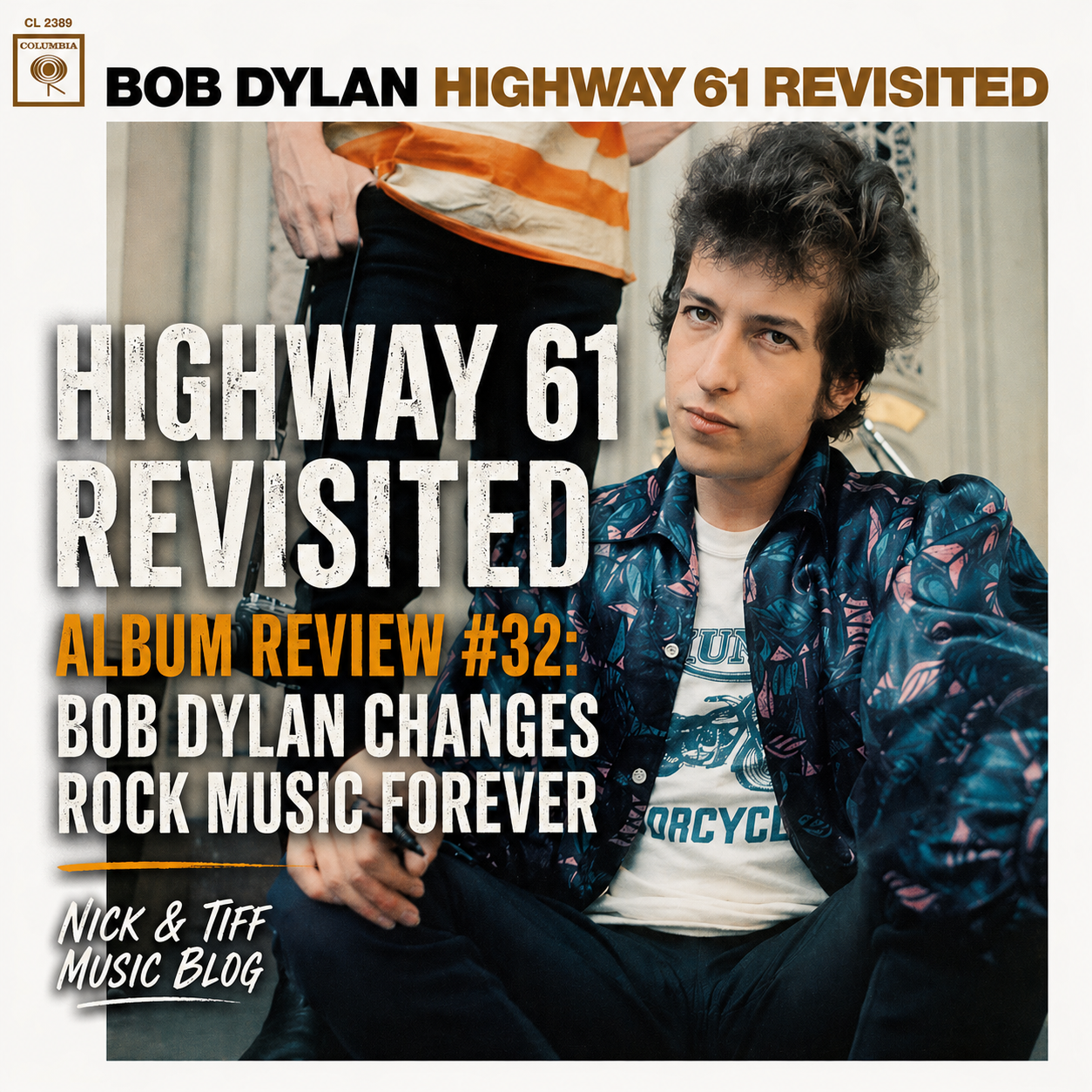
There are albums that feel important, and then there are albums that shift everything. Highway 61 Revisited is the moment where Bob Dylan fully commits to going electric — and in the process, opens the door for rock music to become something smarter, sharper, and a lot more unpredictable. Bringing It All Back Home had already introduced that side of him earlier in 1965, but this is where Dylan really commits to it, with only “Desolation Row” bringing the album to a close in a fully acoustic setting.
This isn’t just a change in sound. It’s a change in attitude. The writing is looser, wilder, more biting — and backed by a band that gives it weight instead of getting in the way.
Explore more Bob Dylan discussions, Bob Dylan song meaning breakdowns, & album reviews here.
Quick Details
- Artist: Bob Dylan
- Album: Highway 61 Revisited
- Released: August 30, 1965
- Length: 51:32
- Genre: Folk Rock / Blues Rock
Highway 61 Revisited Track-by-Track Review
1. Like a Rolling Stone
Right from the start, the album makes its statement.
“Like a Rolling Stone” doesn’t ease you in — it drops you straight into Dylan’s new world. The organ, the snare crack, the length of the song… everything about it feels bigger than what rock music had been up to that point.
Lyrically, it’s direct and cutting, but never simple. It’s not just about one person falling from grace — it’s about identity, ego, and what happens when everything familiar disappears.
It still feels modern because it is timeless.
2. Tombstone Blues
This is where the album’s chaos really starts to show.
“Tombstone Blues” tears forward with this frantic energy, throwing out surreal images and cultural wreckage so fast that it almost feels like Dylan is daring you to keep up. But underneath all that madness, the song carries real anger. It feels like a protest song aimed at hypocrisy, authority, and the kind of violence and disorder that defined the Vietnam War era.
What makes it work is that Dylan never slows down to explain any of it. He just keeps piling image on top of image, letting the chaos become part of the point. The result is wild, biting, and overwhelming in a way that fits the album perfectly.
Explore “Tombstone Blues” further in our deep dive song review here:
Tombstone Blues Lyrics Meaning: Bob Dylan’s Surreal Satire Explained
3. It Takes a Lot to Laugh, It Takes a Train to Cry
A complete shift in tone.
This song slows the album down and leans fully into a weary blues feel. Dylan sounds loose and almost casual, but the mood underneath is tired, lonely, and resigned.
That is what makes the track so strong. The blues groove and travel imagery give it the feeling of someone drifting through a long stretch of emotional fatigue. It does not need to push too hard. It just sits in that mood and lets it linger.
4. From a Buick 6
This track brings the energy right back.
“From a Buick 6” charges ahead with a fast, bluesy pulse and a rough, lived-in feel. Dylan leans hard into the song’s swagger, turning it into one of the album’s most energetic and unfiltered moments.
What makes it stand out is how naturally it pulls from the blues without sounding stuck in the past. It feels playful, loud, and a little reckless in the best way, which makes it a perfect fit for the album’s wild middle stretch.
5. Ballad of a Thin Man
One of the most haunting moments on the album.
There’s something uncomfortable about this song from the start. The piano feels heavy, and Dylan’s delivery is colder than anything else here.
“Something is happening here, but you don’t know what it is…”
That line alone carries the entire track. It feels like a direct challenge aimed at “Mr. Jones” — the kind of person who is in the music business but does not truly understand the music.
Read our deep dive on “Ballad of a Thin Man” here:
Ballad of a Thin Man (1965) Meaning & Song Review – Bob Dylan
6. Queen Jane Approximately
This one feels almost gentle compared to what surrounds it.
“Queen Jane Approximately” sounds like Dylan addressing someone wrapped up in status, image, and illusion. There is an invitation in the song, but it is not purely comforting. It feels like he is telling that person to come back when the performance is over and something more real is left.
Some listeners have connected the song to Joan Baez because of the timing and Dylan’s relationship with her, but the song works best when it stays a little open. It carries both tenderness and distance, which is exactly what gives it its power.
7. Highway 61 Revisited
The title track brings a sense of humor back into the mix.
It’s built around this loose, almost playful structure, but the lyrics are packed with strange, biblical, and cultural references. The whistle gives it a distinct personality, making it feel different from everything else on the album.
It doesn’t take itself too seriously — and that balance is part of what makes the album work.
8. Just Like Tom Thumb’s Blues
This track feels worn down in the best way.
“Just Like Tom Thumb’s Blues” plays like a surreal trip through exhaustion, temptation, and emotional disorientation. Dylan drops you into a world that feels unstable from the start, with Juarez becoming the backdrop for a song that sounds both literary and deeply lived-in.
What makes it so strong is the way it captures the feeling of being overwhelmed without ever losing its shape. By the time Dylan circles back to New York City, it does not feel like a real solution so much as a desperate attempt to get out of the fog.
9. Desolation Row
The closing track is its own world entirely.
At over 11 minutes, “Desolation Row” strips things back and focuses completely on the writing. The acoustic arrangement gives Dylan room to let the lyrics breathe, and what comes out is a long, surreal look at a world that feels broken, disillusioned, and strangely alive.
The title is often linked to Jack Kerouac’s Desolation Angels, and that feels fitting. Like that book, the song moves through an outsider world filled with poets, misfits, and spiritual wreckage. It does not feel like a story building toward resolution so much as a vision of collapse, confusion, and uneasy truth.
It does not try to wrap anything up neatly. It just keeps unfolding. And that is exactly how the album ends — with no clean resolution, but with a lasting impact.
Explore “Desolation Row” further in our deep dive song review here:
Desolation Row Lyrics Meaning: Bob Dylan’s Surreal Masterpiece Explained
Final Thoughts
Highway 61 Revisited isn’t trying to be perfect — it’s trying to be free. And that’s what makes it so important.
The shift to electric wasn’t just about sound — it gave Dylan a new way to write, and that energy runs through every track. Some songs feel loose, others feel sharp and direct, but all of them feel like they had room to become exactly what they needed to be.
It’s the kind of album that doesn’t just influence what comes after — it changes what artists think is possible in the first place.
Support Nick & Tiff Music: As an affiliate these links help support the blog at no extra cost to you — and we truly appreciate it! Thank you for supporting.
Buy Highway 61 Revisited Vinyl & CD
See Bob Dylan Live:
See Bob Dylan Tour Dates & Tickets
FAQ About Highway 61 Revisited
What is Highway 61 Revisited about?
It doesn’t follow a single theme, but a lot of the album centers around identity, confusion, and a world that feels unpredictable. The lyrics often lean into surreal imagery while still reflecting real emotions and situations.
Why is “Like a Rolling Stone” so important?
It changed expectations for what a rock song could be — longer, more lyrical, and more direct. It showed that songs didn’t have to follow a traditional structure to connect with listeners.
Why is it called Highway 61 Revisited?
Highway 61 is a real road that runs through parts of the U.S. associated with blues history. Dylan uses it as a symbolic thread throughout the album, connecting different ideas, characters, and influences.
Is this Bob Dylan’s first electric album?
Yes — mostly. Bringing It All Back Home introduced Dylan’s electric side, with one side acoustic and the other electric. But Highway 61 Revisited feels like the point where he fully commits to that sound, with only the closing track “Desolation Row” leaning fully into acoustic, folk-style instrumentation.
If you enjoyed this piece, you might enjoy our weekly music discussions, song meaning breakdowns, and full track-by-track album deep dives. You can subscribe below – it’s free.
Browse our articles by Bands & Artists:
Bands & Artists | Explore Music Coverage by Artist – Nick & Tiff Music Blog
Related Reads
What Is the Best Bob Dylan Album? A Look at the Legendary Songwriter’s Greatest Records
The Freewheelin’ Bob Dylan (1963) – Bob Dylan | Album Review #12
Tombstone Blues Lyrics Meaning: Bob Dylan’s Surreal Satire Explained
Desolation Row Lyrics Meaning: Bob Dylan’s Surreal Masterpiece Explained
Tangled Up in Blue (1975) Meaning & Song Review – Bob Dylan
Simple Twist of Fate Meaning & Song Review — Bob Dylan (1975)
Shelter from the Storm Lyrics Meaning: Bob Dylan’s Search for Redemption
Same Vibes #3: Nebraska & Blood on the Tracks
Don’t Think Twice, It’s All Right Meaning: Not “Alright”—But Acceptance of What Was Meant to Be
A Hard Rain’s A-Gonna Fall – Bob Dylan (1963) Meaning & Song Review
Ballad of a Thin Man (1965) Meaning & Song Review – Bob Dylan
Pledging My Time Lyrics Meaning: Bob Dylan’s Devotion Turns Obsessive
From Dylan to Springsteen to Zach Bryan: The Lineage of the American Songwriter
What Is the Best Beatles Album? A Look at Their Greatest Records
What Is The Best Rolling Stones Album? Here’s What Each One Does Best
What Is the Best Bruce Springsteen Album? A Look at His Greatest Records
What Is The Best Tom Petty Album? Exploring His Greatest Records
What Is the Best Neil Young Album? A Look at His Greatest Records
What Is the Best Led Zeppelin Album? Exploring the Band’s Greatest Records
Bruce Springsteen – Born to Run (1975) Album Review #4
Thunder Road (1975) – Meaning & Song Review – Bruce Springsteen
Zach Bryan – With Heaven on Top (2026) | Album Review #6
Zach Bryan – (Self-Titled) (2023) Album Review #5
Something in the Orange (2022) – Meaning & Song Review – Zach Bryan
The 10 Most Underrated Rolling Stones Songs (In Chronological Order)
Dead Flowers Meaning & Song Review — The Rolling Stones (1971)
The 10 Most Underrated Beatles Songs (In Chronological Order)
Why Revolver Is The Beatles’ Most Underrated Masterpiece
The Beatles – The White Album (1968) | Album Review #9
Check out our Album Review Archives Page here:
Album Reviews | Nick & Tiff Music Blog
Explore more on the Homepage:
Nick & Tiff Music Blog – ALBUM & SONG REVIEWS – GEAR TALK & STORE UPDATES
Leave a Reply